
Why Your Feet Slip in the Gym (And How to Fix It)
There’s a specific kind of frustration that only happens in the gym.
You’re in the middle of a set. You feel strong. The weight is moving well.
And then your foot shifts inside your trainer.
Not enough to make you fall over… just enough to make you feel unstable.
It’s one of those things you can’t un feel once you’ve noticed it.
And the worst part is, most people assume it’s them.
Bad balance. Weak ankles. Poor control.
But most of the time, it’s not.
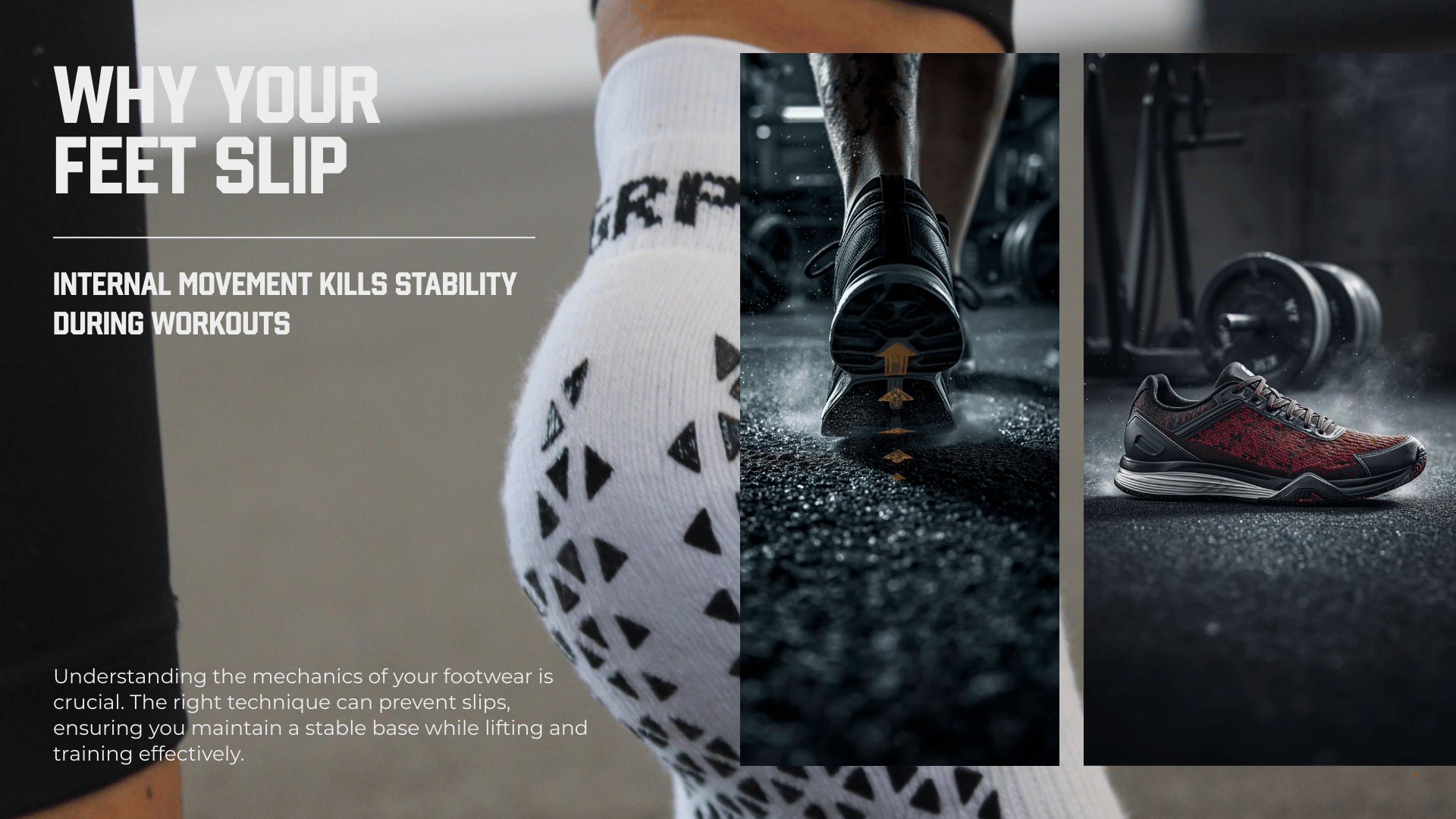
It’s the connection between your foot and your shoe.
The hidden problem with gym footwear
Most gym trainers are built for comfort, not performance. They’re designed for walking around, doing a bit of everything, and feeling nice on your feet but once you start lifting properly, comfort isn’t the goal…stability is.
Add sweat, smooth socks, and repeated movement… and slippage becomes inevitable.
Why slipping kills performance
When your foot moves inside your shoe, your body compensates. Your knees track differently. Your balance becomes less predictable, and you lose confidence at the bottom of a squat. You hesitate on a heavy rep and that hesitation is basically your nervous system saying “I’m not stable enough to push”.
You don’t need to be a sports scientist to understand this.
If your base isn’t solid, everything above it becomes harder.
Why it gets worse as the weight gets heavier
The heavier you lift, the more stability matters.
Small movement at the foot becomes big movement everywhere else.
That’s why foot slippage usually shows up most when you start training properly. Not when you’re warming up.

How to fix it (without overcomplicating it)
There are three main ways to reduce foot slippage in the gym.
- You can improve your shoe choice
- You can improve how you lace them
- You can improve what’s happening inside the shoe.
Most people do the first two… and ignore the third but the third is often the missing piece.
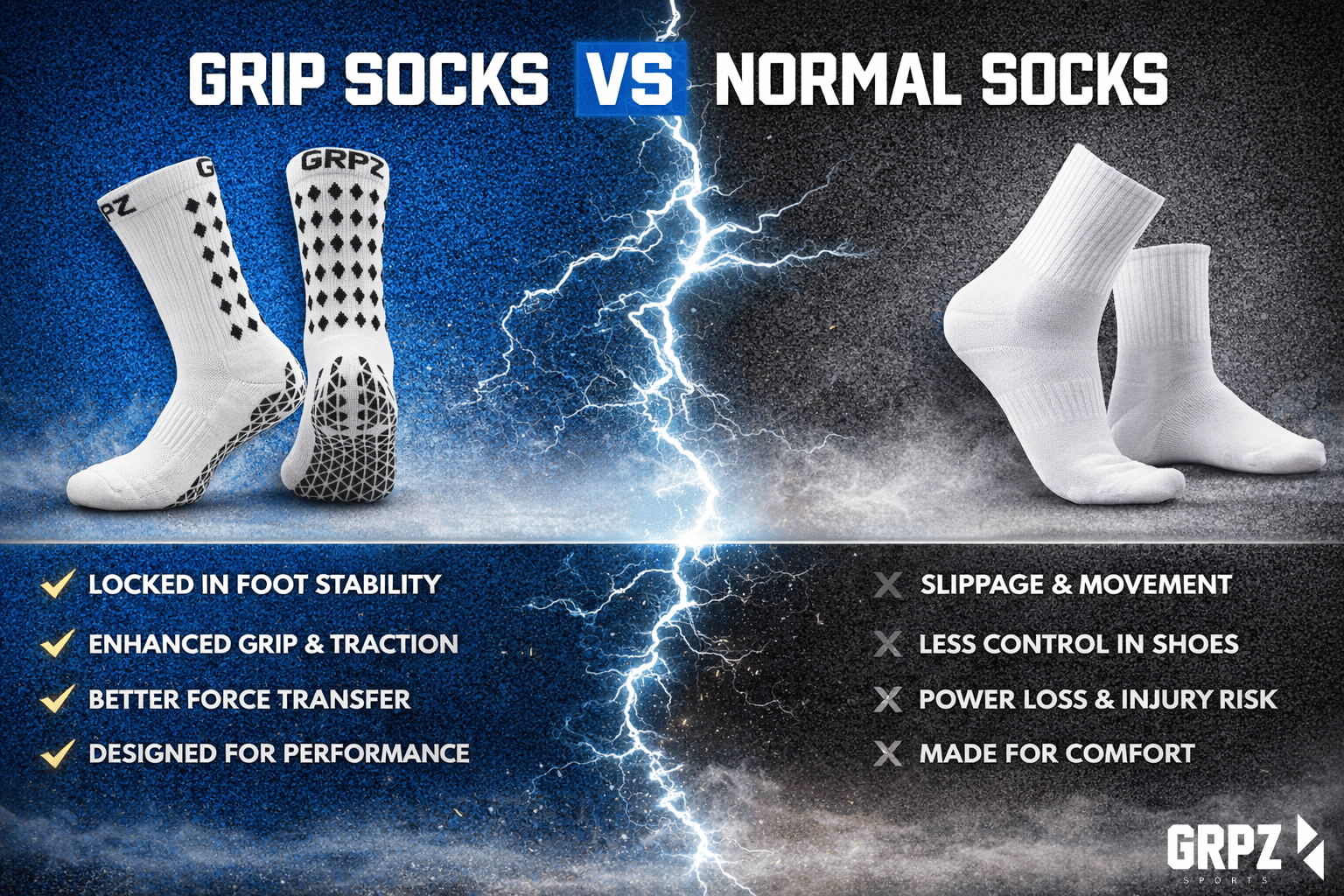
Grip socks reduce internal movement without changing your shoes. They give you that planted feeling most people assume they’ll only get from buying lifting shoes.
Where GRPZ fits in
GRPZ Workout PRO socks are built for this exact problem. They’re not bulky. They’re not over cushioned. They’re just designed to keep your foot stable inside your trainer when you’re training hard.
The bottom line
If your base isn’t stable, nothing above it is. Fixing foot slippage is one of the simplest upgrades an athlete can make and once you feel the difference… it’s hard to go back.
Grip socks vs normal socks (quick comparison)
|
Feature |
Standard Socks |
Grip Socks |
|
Foot stability under load |
Often inconsistent |
More consistent |
|
Confidence in heavy reps |
Can drop under fatigue |
Holds better |
|
Internal foot movement |
Higher |
Lower |
|
Best for |
General gym use |
Strength + hybrid training |
FAQs
Q- Why do my feet slip in my trainers when I squat?
A- Because most trainers and socks aren’t designed to lock the foot in place under load, especially when you sweat.
Q- Do grip socks help with lifting?
A- Yes. They can improve stability and confidence by reducing internal movement inside the shoe.
Q- Is foot slippage bad for your knees?
A- It can be. Slippage can change knee tracking and stability, especially under heavy loads.
Q- Do I need lifting shoes instead?
A- Not always. Grip socks can improve stability without changing shoes, although shoe choice still matters.
Q- Are grip socks worth it for the gym?
A- If you lift heavy or train properly, they’re one of the simplest upgrades you can make.
Q- What GRPZ socks are best for gym training?
A- GRPZ Workout PRO socks are designed for gym and hybrid training where stability matters.