

Why We Built GRPZ: The Performance Problem Nobody Was Solving
Most training sessions end the same way. You worked hard. You moved well. And somewhere between the first rep and the last, you made a small adjustment you barely noticed. A foot repositioned inside a boot. A grip reset under load. A moment where something shifted, and your body corrected without you asking it to.
That correction is the problem. Not the session. The gap.
The Gap Nobody Talked About
Athletes were slipping inside their footwear. Not on the surface. Inside the shoe itself. And because it happened gradually, a millimetre of movement here, a small lateral shift there, most athletes never identified it as a problem. They identified the symptom: a missed touch, a planted foot that didn't feel right, a heavy lift where the force transfer wasn't clean.
They blamed technique. They blamed fatigue. They blamed the surface. The actual cause... an unstable internal environment between foot and boot that went unaddressed because no brand was talking about it seriously.
Performance Is Built From the Ground Up
Every structure needs a stable foundation. In training, that foundation is the connection between foot and ground. Not the ground surface but the internal connection. What happens inside the footwear before force even reaches the floor.
When that connection is inconsistent, everything above it compensates. The ankle makes micro-adjustments. The knee absorbs load it was not designed to absorb in that pattern. The hip fires differently. The whole kinetic chain is working around a problem at the base, a problem that is invisible because it lives inside the shoe.
"The athlete who trains four times a week and still feels slightly unsettled at foot strike is not doing something wrong. Their base is just not giving them what they need to be consistent."
Consistency in sport is not a mental quality only. It is also a structural one. When the base holds, the athlete does not have to compensate. They can direct all available energy into the movement, not into stabilising a base that should already be stable.
What Internal Movement Actually Does
When a foot moves inside a boot or trainer, even by a small margin, the transfer of force from foot to surface is disrupted. A planted foot that shifts laterally at the moment of weight transfer is not delivering full force through the intended contact point. A cutting movement that begins with internal foot movement loses a fraction of its initial drive. Under fatigue, these fractions compound.
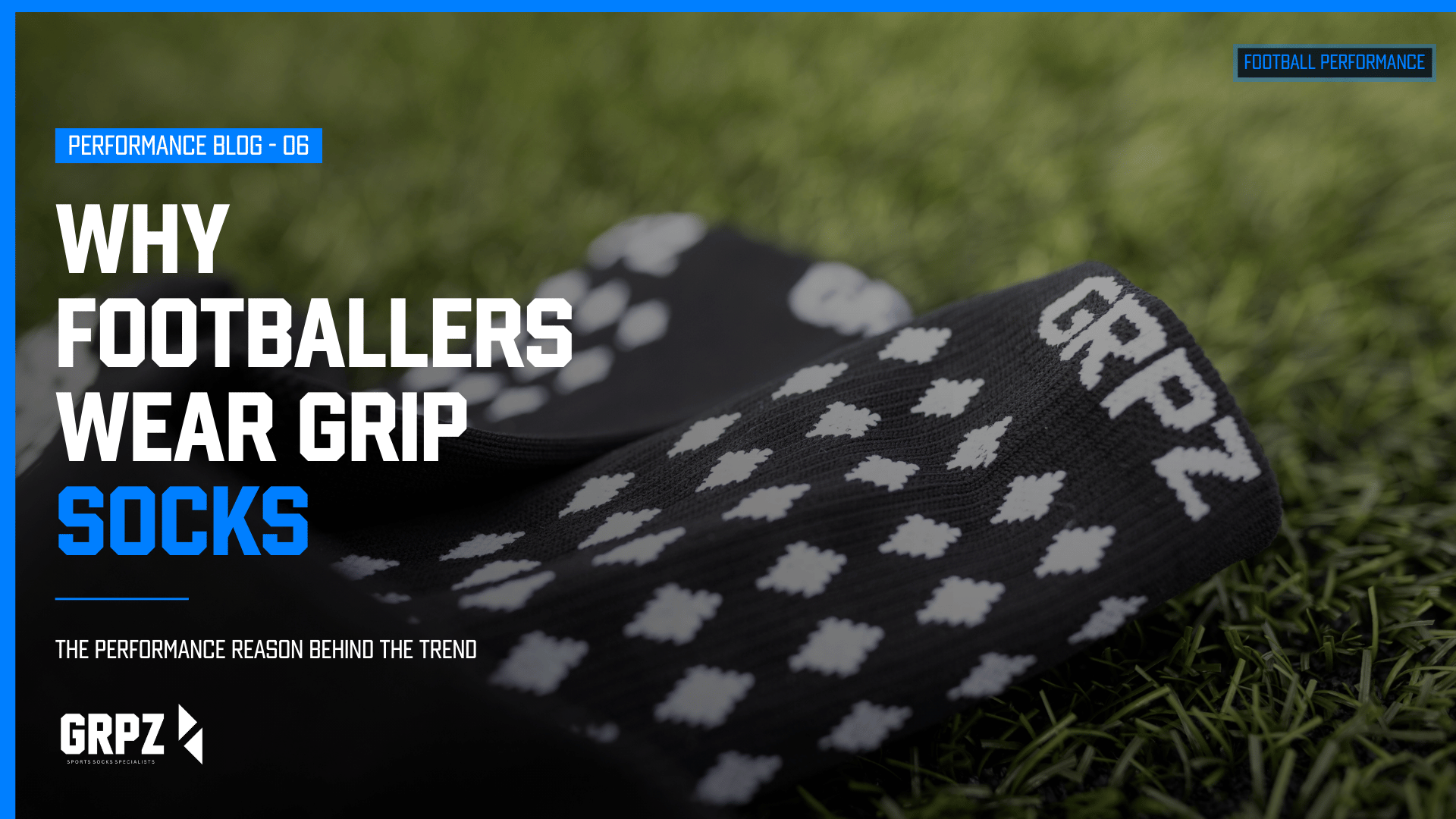
The fix is not a tighter boot. Compression at the ankle does not address movement inside the sock. The fix is internal grip, a structured rubber based grip pattern built into the sole and toe box of the sock itself, creating consistent contact between foot and footwear so that every movement initiated by the athlete is delivered without the base adjusting first.
What This Means in Your Next Session
In your next training session, pay attention to the moments where your foot makes an adjustment inside your footwear. Not slipping on the surface, adjusting inside the shoe. A reset on a cutting movement. A repositioning under a heavy squat. A grip reset mid-sprint.
Count them. Most athletes are surprised by the frequency. Those corrections are the gap. Every one of them is an opportunity to be more consistent, more direct, more efficient with force. The question is whether the kit you are wearing gives your foot a stable base to work from.
GRPZ was built to close that gap to give athletes a consistent internal connection between foot and footwear, so that every rep, every session, and every surface starts from a base that holds.
The Bottom Line
Most training sessions end the same way they started. Slightly imprecise. Slightly adjusted. Slightly less than what was possible. Not because the athlete did not work hard. Because the base never fully held. That is the problem GRPZ was built to solve. Not the most visible problem in sport. The most consistent one.
GRPZ VS TYPICAL BRANDS
Feature |
Typical Brand |
GRPZ |
|
Product focus |
Lifestyle-first |
Performance-first |
|
Design priority |
Aesthetics |
Function |
|
Testing approach |
Minimal |
Athlete-led |
|
Built for |
Casual wear |
Training load |
|
Brand voice |
Motivational hype |
Earned authority |
FAQs
What does GRPZ stand for?
GRPZ is built around performance grip socks designed for athletes who train hard across football, gym, and hybrid sport.
Why did GRPZ start making grip socks?
Because internal foot movement inside footwear is a real, consistent performance leak particularly under fatigue and no brand was addressing it seriously.
Are GRPZ socks only for football?
No. They are used across football, gym training, reformer pilates, and hybrid events like HYROX.
What makes GRPZ different from other grip socks?
Performance-first design. Internal grip engineered for training load, not lifestyle. Products tested by athletes and shaped by real session feedback.
Do you work with clubs and academies?
Yes. GRPZ works with competitive teams and academies who take marginal gains seriously and value consistency across kit.
Where can I buy GRPZ socks?
Directly from the GRPZ website or Decathlon.