
Grip vs Cushion: What Matters More in the Gym?
Walk into any sports shop and the sock wall will tell you one story.
Cushioning. Padding. Impact protection. Arch support.
What it won't tell you much about is grip. And for gym training, that's the conversation that actually matters.
What cushioning is designed to do
Cushioning was developed primarily for running. High repetition, repetitive impact, the same motion thousands of times.
In that context, reducing the force of each foot strike across distance makes sense. The cumulative impact over a long run is significant and cushioning genuinely helps manage it.
Gym training is different. The movements are different. The demands are different.
Why cushioning works against you in strength training
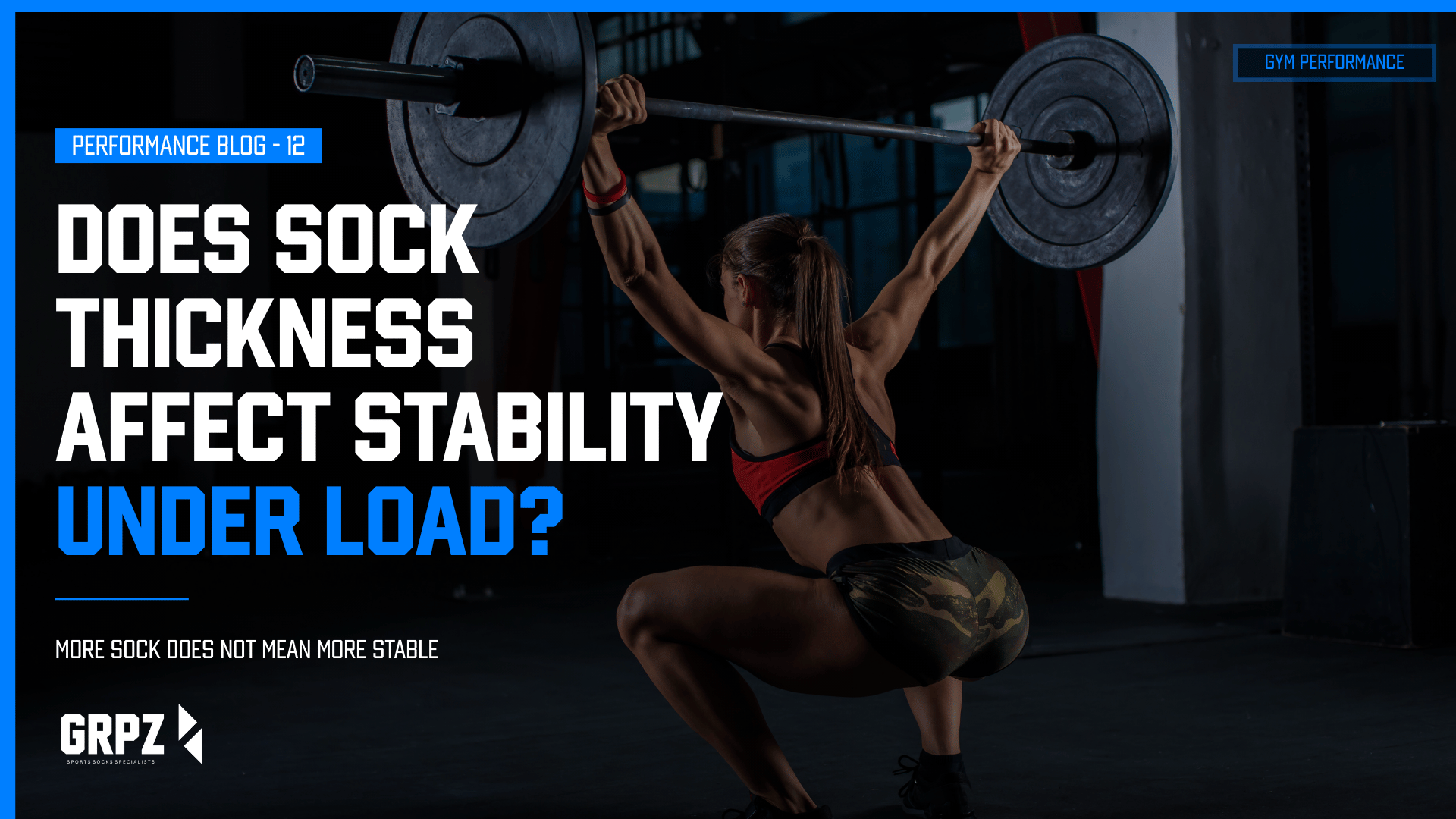
Heavy lifting requires maximum force transfer. You want the energy you generate to go directly into the bar, not get absorbed by the surface underfoot.
Cushioning absorbs force. That's its function. In running, useful. In a heavy squat or deadlift, that absorption is energy you generated and lost before it reached the ground.
This is why experienced lifters move toward flat-soled shoes with minimal cushioning. More ground contact. More direct force transfer. Better lift.
The sock inside that shoe follows the same logic.
What grip actually does
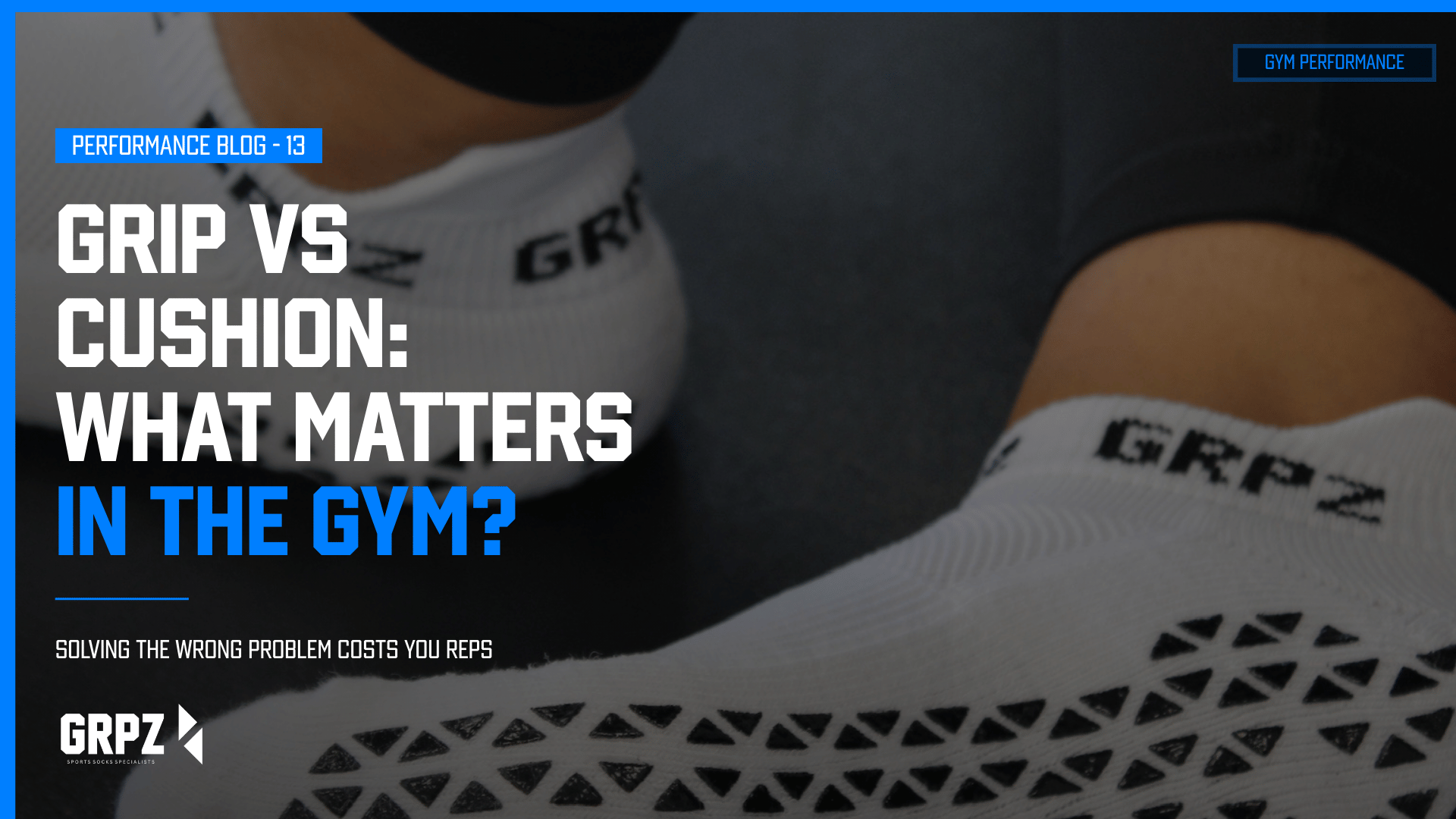
Grip in a training sock doesn't grip the floor. It grips the interior of your shoe.
The grip pattern creates friction between the base of your foot and the shoe lining. That friction prevents your foot from moving inside the shoe during loading.
When your foot is stable, your body knows where it is. That positional certainty allows your nervous system to commit fully to the movement.
Less hesitation. More output.
The fatigue factor
The difference between grip and cushion often isn't obvious in the first set.
It shows up in the last one.
Under fatigue, the small compensations your body makes for instability become larger. The foot that was moving slightly inside the shoe at the start of the session is moving more by the end.
Grip maintains consistency across the session. Cushioning doesn't address the movement problem that gets worse as you tire.
When cushioning earns its place in the gym
This isn't an argument against all cushioning. It's an argument for knowing what you're training for.
For high-volume conditioning work — circuits, sled work, plyometrics — some impact protection is useful. The repetitive nature of those movements means the body benefits from some shock absorption.
For heavy compound lifts, the priority flips. Stability and ground feel take precedence.
The best gym training wardrobe accounts for both. Different sessions have different demands.
→ GRPZ Workout PRO — built for the stability demands of serious gym training. grpzsports.comShop at grpzsports.com |
The bottom line
Cushioning and grip solve different problems.
If you're training hard in the gym - lifting heavy, moving fast, going into fatigue — grip is the property that improves your training. Cushioning is the property that makes your feet comfortable.
Know which one you need. Then choose accordingly.
FEATURE |
STANDARD SOCKS |
GRIP SOCKS |
|
Primary function |
Absorb impact |
Prevent internal foot movement |
|
Effect on heavy lifts |
Can reduce force transfer |
Maintains direct force transfer |
|
Under fatigue |
Doesn't address stability degradation |
Maintains consistent foot position |
|
Best application |
Running, repetitive impact sport |
Strength training, gym, football |
FAQs
Q — Is cushion or grip more important for the gym?
For strength training, grip and stability are the priority. Cushioning is useful for high-impact, high-volume conditioning work but works against force transfer in heavy lifting.
Q — Why do serious lifters prefer minimal cushioning?
More direct ground contact improves force transfer and proprioception. A stable, flat base is more efficient for heavy compound movements.
Q — Does grip sock texture feel strange when lifting?
No. The grip pattern is on the sole of the sock and interfaces with the shoe interior. You don't feel it between your foot and the ground.
Q — Can I use one sock for both lifting and conditioning?
A properly constructed grip sock with moderate thickness handles both. The key is that stability is present throughout regardless of the movement type.
Q — Do grip socks improve performance in isolation?
They remove an obstacle rather than add a property. When internal movement is eliminated, the performance that was already there expresses more consistently.
Q — Which GRPZ socks are built for gym training?
GRPZ Workout PRO socks are designed for the full range of gym training — from heavy compound lifts to hybrid conditioning sessions.