
Article: How We Design Performance Socks: Materials, Grip & Fit
How We Design Performance Socks: Materials, Grip & Fit
Most socks are designed around one question: how comfortable can we make this for the price we're selling it at?
That's a reasonable question if you're making everyday socks.
It's the wrong question if you're making performance socks.
The question we start with
Every GRPZ design decision begins with a different question.
What does this athlete need from this sock in the moment that matters most?
Not in the first five minutes of a session. Not on the way to training. In the 70th minute of a hard match. Under a heavy third set. At the point where everything that isn't built properly starts to show.
Grip pattern design
The grip pattern is the most technically specific element of a performance sock.
The pattern needs to create enough friction between foot and shoe lining to prevent internal movement. But it can't add so much bulk that it changes the fit of the boot or trainer.
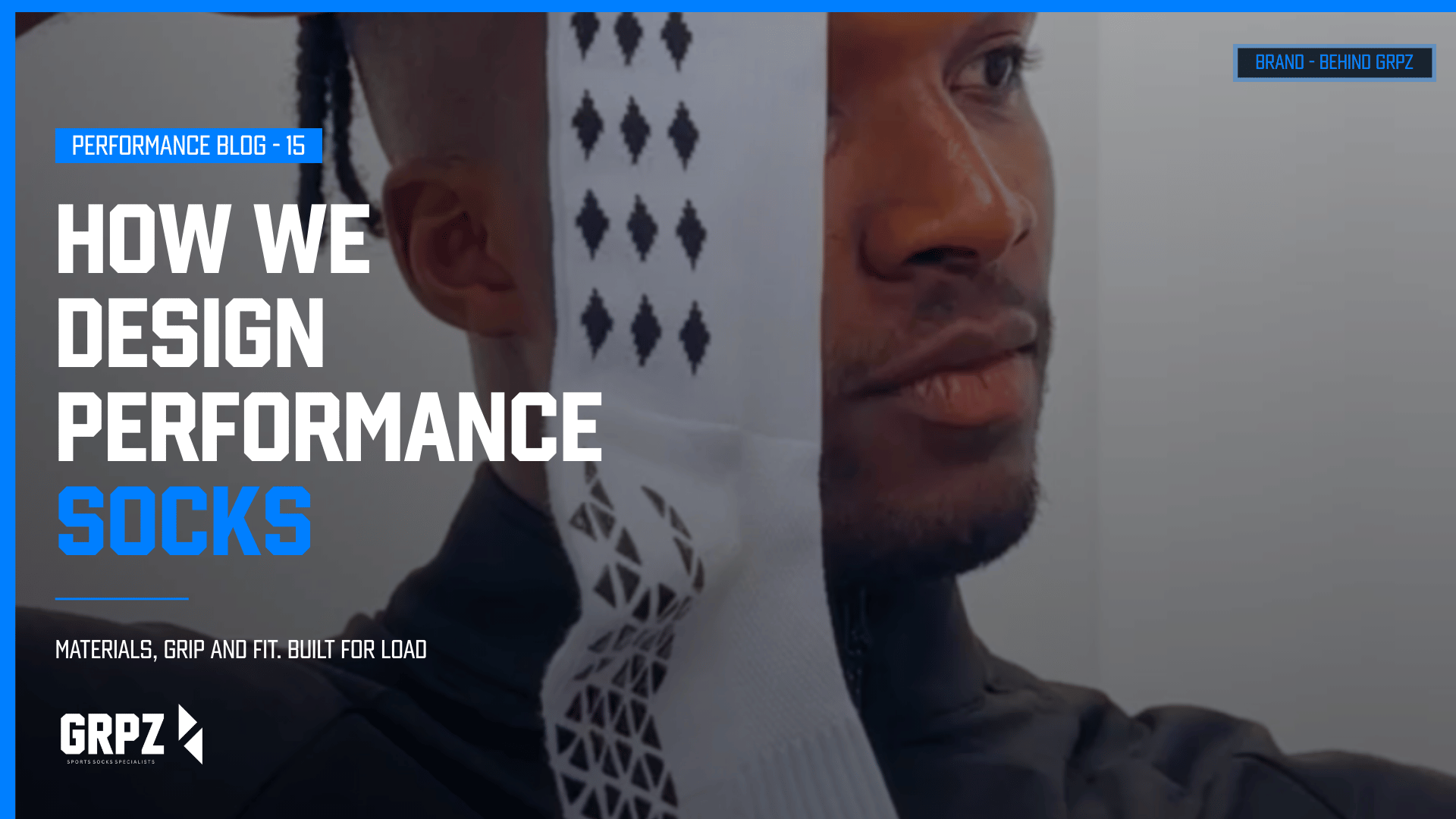
The GRPZ diamond grip pattern was developed through testing on both smooth gym trainer linings and the tighter interior surfaces of football boots. Full coverage across the sole was the conclusion. Partial coverage left areas where the foot could still move under high-load direction changes.
Coverage matters. The grip needs to be everywhere the foot can move, not just where it looks best.
Material choices
Performance sock materials need to do three things simultaneously.
They need to hold their shape under load and across multiple sessions. They need to manage moisture without retaining it — sweating into a sock that holds moisture accelerates internal movement. And they need to maintain compression consistency — a sock that loses elasticity mid-session is no longer doing its job.
The material decisions in GRPZ socks are made against those three requirements. Not against a comfort specification or a cost target.
Fit and compression
A performance sock has to fit properly before everything else. A loose sock moves. A sock that moves creates friction. Friction creates blisters and instability.
The midfoot is the most critical area. That's where the arch sits, where the foot is most likely to pronate or supinate under load, and where compression has the most direct effect on internal stability.
The cuff construction matters for football use specifically. The cuff needs to stay in position across a full session without rolling or slipping. Any movement in the cuff changes the distribution of the sock across the foot and affects the grip pattern coverage.
What athlete testing changes
Lab specifications don't tell you how a sock performs under fatigue on artificial turf in a two-hour session.
Athletes do.
The design decisions that came from testing weren't always what the specs suggested. Full grip coverage over partial. Specific compression levels at the midfoot versus a uniform construction. Material blends that prioritised moisture management over softness.
The product is shaped by what held up under real conditions. Not what looked best on paper.
→ GRPZ Performance PRO and Workout PRO — built around performance, not comfort specs. grpzsports.comShop at grpzsports.com |
The bottom line
Performance socks are designed from the inside out. Starting with what the athlete needs under load, at the point in the session when everything else starts to give way.
That's a different brief than making something comfortable for the price.
And the difference shows up exactly when it needs to.
FAQs
Q — What makes a sock a "performance" sock?
A performance sock is designed around stability, grip and durability under training load — not just comfort. The design decisions start with what the athlete needs, not the cost target.
Q — Why does grip pattern coverage matter?
Partial coverage leaves areas where the foot can still move under load. Full sole coverage is the only way to consistently prevent internal movement across all movement types.
Q — How does moisture management affect performance?
Sweat inside the shoe reduces friction between foot and shoe lining. A sock that manages moisture maintains its grip performance across the full session.
Q — Why does midfoot compression matter specifically?
The midfoot is where the foot is most likely to move under pronation or supination during load. Secure compression there directly improves stability.
Q — How much does athlete testing actually influence the final product?
Significantly. Several key design decisions in GRPZ products — including full grip coverage and specific compression zoning — came directly from athlete feedback, not from initial spec work.
Q — Where can I learn more about specific GRPZ products?
Full product information on Performance PRO and Workout PRO is available at grpzsports.com.