

Preventing Blisters in Football Boots
Blisters don't stop you training. But they slow you down.
They change how you run. They make you guard certain movements. They turn a normal session into something you're just trying to get through.
And the frustrating part is they're almost always preventable.
Why blisters happen in football boots
Blisters are caused by friction. Repeated rubbing between two surfaces damages the skin and the fluid underneath builds up as protection.
In football boots, that friction usually comes from one of three places.
The boot rubbing against the back of the heel. The toe box compressing and releasing with every stride. And the foot moving inside the boot and creating friction against the sock lining.
The third one is the most overlooked. And it's the one most easily addressed.
The role of internal movement
When your foot moves inside your boot, the sock moves with it. That movement creates heat. Heat creates friction. Friction creates blisters.
This is why blisters tend to get worse as sessions go on. Early in a session, your foot is cooler and the fit feels more controlled. Later, as you sweat and fatigue builds, movement increases.
That's when the damage accumulates.
Why 4G and artificial pitches make it worse
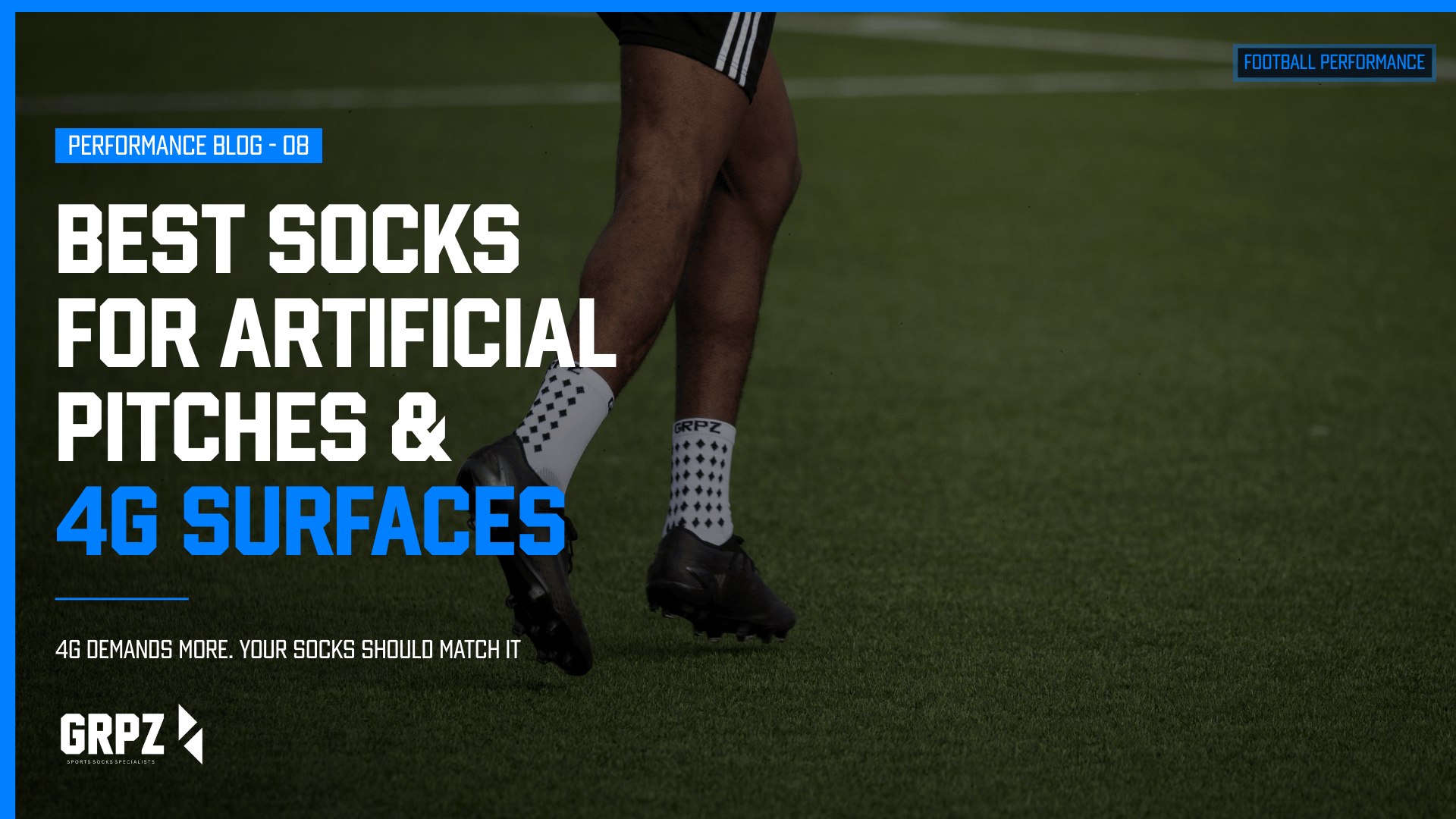
Artificial pitches generate more friction between boot and surface than grass.
That higher external friction means more force is being transferred through your foot on every contact. Combined with internal movement, the total load on your skin increases significantly.
Players who rarely blister on grass often blister on 4G. Same boots. Same socks. Different surface demands.
How to reduce blister risk
Boot fit is the starting point. A boot that is too wide or too long creates space for movement. A boot that is too tight creates pressure points. Neither is right.
Lacing matters too. An unlocked heel means more movement at the back of the foot, which is where most football blisters appear.
But the thing most players don't address is what's happening between the foot and the boot lining.
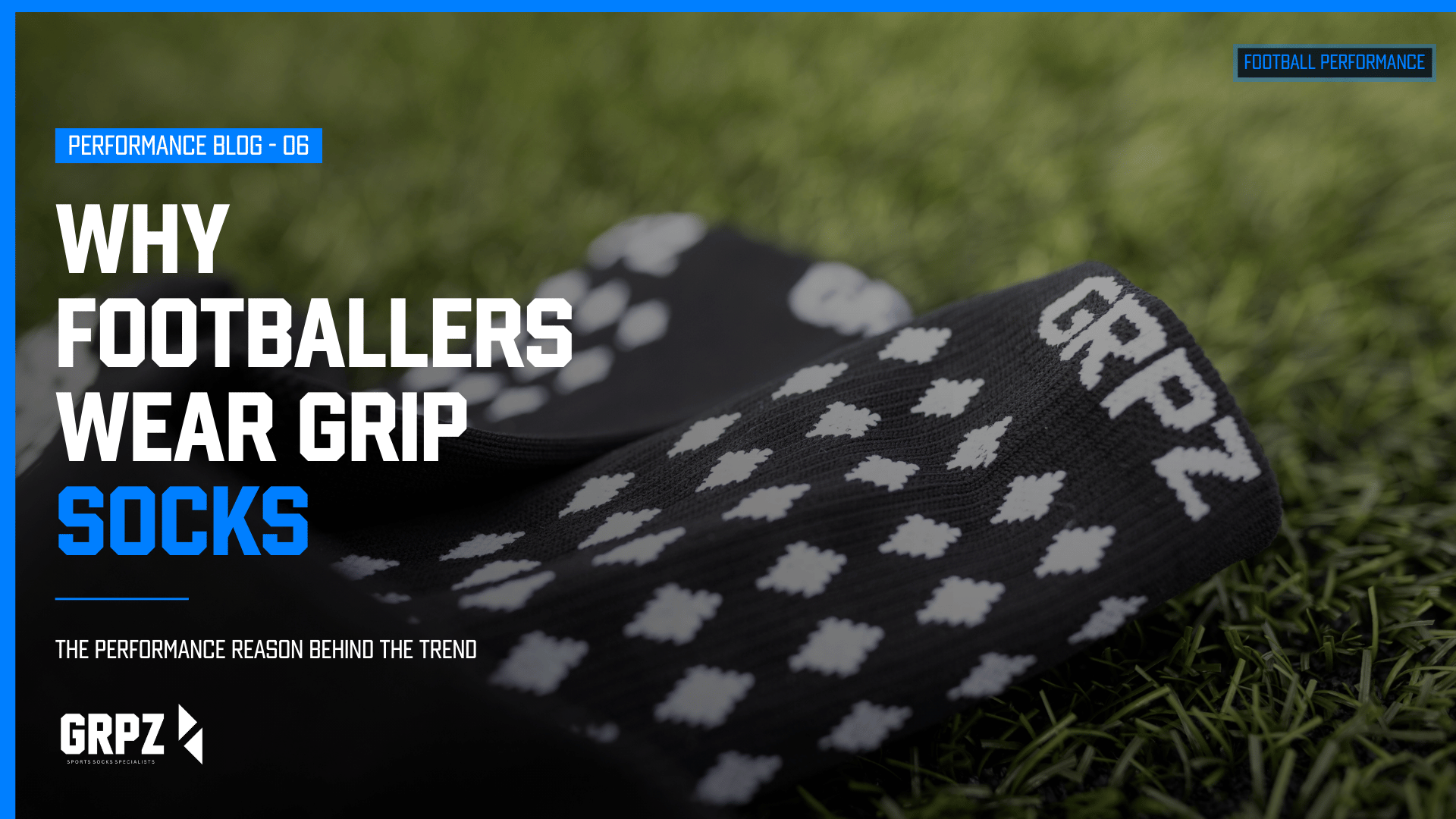
Standard team socks are relatively smooth. They allow the foot to move. Grip socks reduce that internal movement. Less movement means less friction. Less friction means fewer blisters.
→ GRPZ Performance PRO — designed to reduce internal movement and blister risk in football boots.Shop at grpzsports.com |
Breaking in new boots
Most blisters happen in new boots. The lining is stiff and the fit hasn't moulded to your foot yet.
Wear new boots for short sessions first. Use grip socks from the first session to reduce friction during the break-in period. Don't go straight into a full match in boots you've only worn once.
The bottom line
Blisters are a friction problem. Friction is a movement problem. And most internal foot movement in boots is addressable.
Sort the fit. Lock the heel. Reduce internal movement with a proper grip sock. The blisters that most players accept as normal largely disappear.
FEATURE |
STANDARD SOCKS |
GRIP SOCKS |
|
Internal foot movement |
Higher with standard socks |
Reduced with grip socks |
|
Blister risk on grass |
Moderate |
Lower |
|
Blister risk on 4G |
Higher |
Often significantly reduced |
|
Session duration impact |
Worsens as session continues |
More consistent throughout |
FAQs
Q — Why do I get blisters in my football boots?
Usually a combination of internal foot movement, boot fit, and the demands of the surface. Most blisters are a friction problem.
Q — Do grip socks prevent blisters?
They can reduce them significantly by reducing the internal movement that causes friction between foot and boot lining.
Q — Why do I get more blisters on 4G than grass?
Artificial surfaces generate more external friction. Combined with internal movement, the total friction load on the skin is higher.
Q — How should I break in new football boots?
Short sessions first, proper fitting socks from the first wear, and lacing technique that locks the heel to reduce movement.
Q — Do thicker socks help with blisters?
Not always. Thickness adds cushion but doesn't necessarily reduce movement. Grip reduces movement directly.
Q — Which GRPZ socks help with blisters in football boots?
GRPZ Performance PRO socks are designed to reduce internal movement, which is the primary cause of friction blisters in boots.